Wisdom

Mom always says, "never cut a knot, always untie it. If you can't figure out how to untie a knot, you'll never figure out how to solve your problems."
Showing posts with label Emily Dickinson. Show all posts

Sunday, March 4, 2012

arriving with march

Emily Dickinson said, Dear March - Come In
So I invite you as well.  I've been gone a bit, I know.  But, I've been stitching away. I have finished fascicles 4 and 5. Only thirty-five more to go!  I will compose a separate blog for that but today I'm welcoming March. 
March cloth
Dear March - Come in - 
How glad I am -
I hoped for you before -
Put down your Hat - 
You must have walked -
How out of Breath you are - 
Dear March, how are you, and the Rest -
Did you leave Nature well - 
Oh March, Come right upstairs with me -
I have so much to tell -

and telling in the details:
detail
The cloth was first woven, ala cloth to cloth, and then stitched. The words on the cloth are there for me.  They are: 8th full moon, 3/14 pi day, 15th Ides, 2012, daffodils, after the Greek god of war, 31 days, Marze, Lentmont, 21 Spring and Ostara. Ostara is a Saxon/Germanic/pagan goddess that brings Spring. The swirls on the cloth are those March winds that have been blowing around. 
Ostara (1884) by Johannes Gehrts. The goddess flies through the heavens surrounded by Roman-inspired putti, beams of light, and animals. Germanic people look up at the goddess from the realm below.http://en.wikipedia.org/wiki/Ostara
 
Another day remembered on the cloth is 11:00 am, March 11, 2008.  That is for my dad.  
I got your Letter, and the Birds - 
The Maples never knew that you were coming -
I declare - how Red their Faces grew -         
But March, forgive me - 
And all those Hills you left for me to Hue - 
There was no Purple suitable - 
You took it all with you - 
I also am going to do a Ides of March cloth - seems to me each month has an Ides but we only remember March's... Still a WIP but even so:

The cloth is dyed with the indigo carmine and acorn.  It was folded during the dye process hence the lines.   
Who knocks? That April -
Lock the Door -
I will not be pursued -
He stayed away a Year to call 
When I am occupied -         
But trifles look so trivial 
As soon as you have come
That blame is just as dear as Praise 
And Praise as mere as Blame -
I also played around a little with weaving.  Jude has been talking about it over at Spirit Cloth here and here.  This brought back memories of when I use to rent a loom...about 35+ years ago when I first moved out on my own.   I would spend my evenings at a place called The Weaving Workshop weaving away.  It gave me great fun to tell people where I worked that I was going out to warp!  Anyway this is what I did.  It's about 3x5 inches. The brown thread is my walnut dyed thread.  The blue is purchased cotton.  
weave experiment
My father made the little "lap loom" if I can call it that, many a many years ago :
dad's touch
I found this a while ago, going through a draw in one of my old room's at my mom's.  It brought back more memories. 

The poems is Emily Dickinson's "Dear March - Come In"

I should be back by week's end with fascicles 4 and 5.  Thank you for welcoming March in with me.  Spring can not be too far away.  Cheers


Saturday, January 7, 2012

2011+1= moving into the new year


The Snowshoe Hare, by Mary Oliver, from New and Selected Poems, Beacon Press, 1992.

Greetings for the new year.  I feel as though I've been lagging behind and had better post something before the first full week of the new year passes, the moon becomes full and starts waning, and the constellations that are visible take flight and realign  themselves. I picked the piece above from Mary Oliver because of a few words that would apply to those of us that have picked cloth and thread as our medium...tangles, lapping thread...across the field and into another year. 

I've been occupying myself with domestic affairs.  My mother had a few issues with heat - as in furnace went out and then the fuse box needed updating/replacement...and of course the payment of same. There is one small minor electric replacement that needs to be done but if it doesn't happen no big deal. 

Most of my time was spent at mom's during the pass week, yes we even stayed up until midnight on NYeve.  I think this was a first for us, together at the changing of the guard.  I had a small bottle of bubbly, have had it for near 30 years, so we opened it and even did a toast.  I think mom managed a sip or two and I think I scored about four before we decided, that's okay, we've done the ritual.  But she enjoyed it so...

The hands that first taught me to hold needle and thread...of all kinds.
I still think her hands are quite beautiful, even though they do show their age, and time has not been kind.  She has arthritis in her hands and has a hard time bending the fingers. She tries still to knit and crochet, though her memory is such that she is always undoing her stitches, since there are more or less  then what she originally starts out with.  But I'm going to give her a box of various thread so she might try embroidery. She use to make such beautiful cloths. 

I did occupy myself with stitching while I pondered domestic life. I finished LEFT, but will do a separate post on that.  I did finish my first cloth fascicle.  Assembled the beginnings of another and a larger cloth, 12x12.  That's large for me, since mostly the fascicles are closed, 4x4, and open page layout, 4x8.


This is the first fascicle to be completed.  One thing I did learn, even though I managed to get the three images on the page - the collation and pagination were off.  I did them as 4x8 page spreads not remembering that once they got bound the facing image/text would not correspond.  I have fix that for fascicle two.  So as a result the negative (cut-out, text, left-side, odd-numbered) image is not with the partnered leaf-positive (leaf, image, right-side, even-numbered) page.  The front-cover image is the outline of a half-oak-leaf and the dates worked.  The back cover has a few cryptic symbols, notes, comments - that is my thinking/thoughts sketching page.  The inside of the book has a, usually six line, poem that is the voice of the leaf that is pictured on the page.  All  my leaves are female - that is the voice that I know best.  I usually write these in my head while walking mom's dog...they are reactions but my mood, the day, something I see.  (My Chekhovian, "subjects for a short story," from the Seagull) I'd probably be better off taking a notebook with me, since sometimes it a race to remember as well...but maybe that is part of the processes.  The stitching is not pre-planned. It too depends on the mood and what's in my thread bag.  I really like working with this size...and books, well, they are as natural to me as my right hand.  I became a librarian because I simply love the touch, feel, contents, smell, the totality of the book.  

I've also been placing a little "key" on the pages as I'm stitching.  They are little squares that are stitched in the colors of the sky, at some point during the day...the most prominent color of the day.  This is done from something that I saw Deb G. doing over at her blog beecreative.  Deb is part-taking in something called the sky scarf: Leafcutter Designs - Projects, Conceptual Knitting.  The idea is to knit a row a day in response to the sky.  I really liked this idea, but really, starting another new project wouldn't be wise, I said to myself.  But I did like this so much that it's in my mind, on the mental Rolodex, and I'll do it down the road.  In the meantime, however, my little "keys" are my version of the sky scarf idea. 

Emily Dickinson made forty fascicles of her poems in her life time.  So I've decided that this year I will make forty as well.  With fifty-two weeks and one extra leap day I might make it.  It took me about a week to do this.  Assembly is part of the process.  I have a few yard of a natural muslin that is 32" in width.  I can tear 4" section that easily divide into four, 4x8 "pages."  Then the leaf preparation and assembling.  The stitching and notations are made following this processes.  I have also been keeping a "paper" fascicle as a sketchbook.  

The next fascicle is also ready to go:

You can see that I have adjusted for the collation, pagination issue.  Only the center, pages 3-4 are the actual images that will be seen together after assembly, (lower left corner)  The other pages are 2 and 5, 1 and 6. They are almost all basted and ready for stitching.  The cover is also started.  This time I'm putting the "keys" on the back, as well as the contents listings, the notations; this will act as sort of a colophon.  

Oh, and just to have something to do other then the fascicle project, I'm going to do doodling on cloth, my calendar cloths, if you like.  I thought I would do a monthly cloth, 12x12, where I could try out ideas, stitching/stitches and what-nots.  I guess you could call it a sampler or my what-if project. 

This is the January cloth, pinned, sketched and experimenting with.  I'm not sure about that round circle object.  I don't see it blending in with the cloth over-all.  I think it would be better done in just thread but once it is stitched up maybe it won't be the thorn of the upper right corner.  We'll see.  

Thank you for stopping by and hope your week passed was not riddled with domestic problems but happily employing your hands with doing something creative.  


Friday, December 30, 2011

the old, the completed, and to be worked on: 2011+1=2012

Left the piece started a couple of month back is just about done:  99%


The project I started, probably back around middle of October or so is just about finished.  The lower left band has some stitches to finish...will be done by the stroke of mid-night 2011.  I will discuss the story and stitching after the new year. 


OakLight
Gifted to my sister....29 December 2011


This was a piece that I started playing with stitches in preparation for my 2012 little weekly challenge to me.  My fascicles project (see 2 posts ago).  Fascicle Project.  It is bases on the influence of several ideas, but mostly Emily Dickinson "self-published" bound fascicles.  The way she sewed and preserved her poems for herself.  She created 40 all together.  I'm hoping to get about forty done as well next year.  Here, below is the first fascicle.  The main character is an oak leaf, that will tell her story through the year: seasons, months, weeks, days, night, cold, heat.  Her own view from up high and from looking up.


Fascicle, 1.


The beginnings of the Fascicles project.  Each fascicle will be made up of four leaves, 6 pages with a front/back cover.  A single signature sewn with thread, probably red, since I don't use much red (read) thread and somehow I've gotten it into my head the ED used a color! Basic pamphlet style sewing: 3 holes sewn and tied through the center...leaving a frayed end, "somewhere for the eye to rest."  My very first binding teacher told me to fray the thread, leaving sort of a combed hair like effect.  This was her signature - her symbol.  Everyone who had ever studied with Joan Flasch does this same kind of tie-off, "to rest the eye." 
Text will be left and image right.  Various stitches will be used but mostly simple basic stitching.  The text for this page is: 
HappyOak
last of winter
with peace
at the door
contented, soon
i'll be no more
There will be 6 lines of text (including the name/title of the oak leaf that is speaking. I'm still trying to work out the method for including the text.  I will probably just write it without necessarily stitching it...I have planned 40 such fascicle, with 4 leaves, (8 pages): that's 320 pages of stitching.  A bit of stitching I'd say without the text...so it will probably just be "printed" in some fashion.

The fascicles will be my small relaxation project while doing part II of Jude Hill's: magic-diaries-part-2.  That will start in January and go through the end of June.  It is a subscription instructional workshop.  Wonderful things to be learned there. 

And finally:


Wednesday, December 21, 2011

celebrating winter solstice and holiday season


Subdued by the light, some may fear the long coming night.  But tis Winter Solstice Sabbat which occurs on or about December 21st, when the Sun is at 1° Capricorn.  This traditionally marks the midway point of the dark part of the year. Yet, fears fall off within the next few hours when we begin to see an increase in light, which is why we celebrate the rebirth of the Sun on the Winter Solstice. There are myth cycles, which tell of the Oak and Holly Kings, of the Dying and Rebirth of God, that develop dramatically on this Sabbat. This celebration is re-energized from the additional  celebrations, such as Christmas and Hanukkah. For many, the Winter Solstice Sabbat marks the beginning of a week-long family celebration which includes Christmas and New Year’s Eve.
In my favorite myth, of the Oak and Holly Kings, the two gods meet again for another battle.( During the Summer Solstice, the Holly King, God of the Waning Year, defeated the Oak King, God of the Waxing Year.) However, when they meet on the longest night of the year, the outcome is reversed—the Oak King defeats the Holly King.  Celebrating the victory of the Oak King.

So don ye, thy frocks and thy woollies, thy hoods and thy follies,  (though this year most won't see thy much desired winter________ and temperatures are temperate.) So light a torch to see ye through the hours and bring morn full of light. 
eyes through winter


Trees still pay attention though they might not attract visitors except those that seek their shelter.


Gathering ideas for my up coming 2012 project: a year of fascicles. 
first page is forming.  stitching will come through tonight to celebrate the shortest and the coming of light's return


6:00 pm
Postscript regarding the term "fascicle."  If you go to this Link: About Emily Dickinson's Fascicles you will find a short articles describing the use of the term as I'm going to regard it for my 2012 project. According to the Encyclopedia of the Book, (Oak Knole Press & the British Library, 1996, the term can be generally defined as: a single number of a work published in instalments.  Also called fascicule or fasciculus. I like to think of them as little pamphlets that Emily Dickinson stitched to fit into the palm of her hand - to hold her poems and her secrets in the drawer of the writing desk where she would sit and compose her thoughts.  In total she made 40 fascicles but many more hundreds of poems were also found on individual pages.  She was known to write on any paper surface she'd find.  A true bricoleur.  

I had a few comments that left some visitors puzzled by my use of the word so I hope this provides a little insight into how I'm interpreting the term.  

Thank you for finding you way here and stopping by. 

Sunday, December 18, 2011

leafing pages

Where and when it all started: 
The above piece I've called the Three Graces.  This was done is reaction to a post that Jude Hill did on her blog after the hurricane that passed this past Summer.  The one that did considerable damage along the Eastern Coast of the US. I remember Jude picking up an oak leaf and holding it, mentioning that a lot of the leaves were blown off the trees (last week in August - not tree mottling season by any means) and that they had lost one of the old oak trees that was on their property.  There was a feeling of sadness that translated into beauty.  Holding many moments without deciding, September 3, 2011


The image above is what I remember most of those days from her blog.  The cloth on the right became the Hurricane Cloth.  


I started looking and thinking about leaves very differently after that.  Watching especially those transitional ones - the ones that change color, fall, get walked/trampled on. Go from whole to fragments, dust and a final return. 


While collecting these leaves, I also posted a few blog entries, here, regarding Emily Dickinson.  I remember going to her home, entering and peaking to see if it was permitted to walk through a door that presented a cold, dark exhibition area.  It had formerly been a place where Emily use to sit and watch over her garden, changing through the seasons. She would hid out here, especially in the winter when, though not much warmer in this room, it was too cold to venture out.  On display there, there were a few folios that held open pages of her herbarium. (Herbaria are know to go back to the 1600.  They were those volumes upon volumes where people would press and hold flora.  Memory devices, I like to think, more then how we think of them today - botanic study tools.) How different were these from her fascicles? - those composed, stitched, hidden little one installment pamphlets that became her first "printed" edition of the poems.  They were small in size, spare in text,  but left riches for all time.  A small view into her private moments.  They were her secret keepers - her memory devices.  I like to think that her herbaria were not that different of a gesture.


Image of a fascicle page by Emily Dickinson
 For on-line views of some of the Dickinson archives go to:  Harvard Archive.
The library works closely with the Emily Dickinson Museum and the Emily Dickinson International Society to bring its collections to the public. Descriptive information about the family library and about Dickinson's manuscript books or fascicles, letters, herbarium, and family photographs are now on the Web, with a growing number of linked digital facsimiles. 


Page from Emily Dickinson -  Herbarium.  (left)          Cover, volume 1, Emily Dickinson -     Herbarium (right)


Several other objects of inspiration also came along to add to my thought processing.  One of Lynne Hoppe's blog: muslin pages tutorial, Lynne Hoppe actually got me thinking back to my days of book binding.  I spent a lot of my undergraduate years assembling what might be referred to as "artist's books."  A big part of my work was alternative photo-processed images that were then gather as books.  Lynne's muslin book brought back memories of those youthful, energetic, and spirited school days: 
I really got inspired to start thinking about actually doing cloth books with my stitching from this image.  So somewhere between the top image and Lynne's book this is what I ended up with as an initial step:
The image above is a translation of the first image on top of this blog page done in all cloth.  The are just pinned at this point.  The leaves are cloth that has been rusted and two leaves, one oak and one maple were use to trace the shape and then cut out.  This is pinned to a piece of muslin cloth. I then drew the face.  This piece in turn was pinned to a cloth that has been dyed in walnut, rust and indigo carmine.  Each piece in itself is about 8.5x10" - they are separate at the moment. 


These were the other additional things that came along which really contributed more fuel to my thoughts.  Robyn, Art Propelled did an entry on The Poetry of Leaves, December 7th.  I kept going back and looking at the images - they just really wouldn't go away. Wouldn't leave my thoughts.  Two of the artists she mentioned especially were intriguing to the mental composing that was going on during those nights that I couldn't sleep, and kept drawing in my mind.  Patrick Boehner and Ronald Chase.

  The two top images are from Patrick Boehner. 
 Left: Title: Found Objects (Beginning and End)
Artist: Patrick Boehner
Date: 2008
Height: 9 ½" | Width: 8" | Edition of 50, 1 AP 
Height: 7.7" | Width: 6.4" | Open Edition

Right: Title: Documentation and Interpretation (Imperfect Remains)
Artist: Patrick Boehner
Date: 2010
Height: 16 ½" | Width: 11 ½" | Edition of 25, 1 AP


The lower left is a 1994 book titled LEAF by Ronald Chase.  There isn't too much information that I could find about the size or edition.  But, I liked the "aged" look of the paper and the fragile quality.  It really reminded me of something Emily Dickinson might have picked up, held and looked at. 

The other two images come from the Field Museum of Natural History in Chicago, on-line data base.  I've put at the bottom of the blog page, beneath the comment box,  three links to on-line databases, with images, for those that might want to do some further image collecting.  In addition to the Field, there are Harvard University, the largest Herbarium in the US and the University of Michigan's on-line data base.  They titled their's Herbarium but in fact it is a archive of flora in Michigan.  Nice thing about their database, no Latin required.  

I should add also that I worked at the Field Museum of Natural History as a curatorial assistant for 3 years while I was an undergraduate...many a lunch break was spent investigating those dark, musty botany galleries.  

Finally another artist that I discovered making botanical prints is Katie Cooke.  Her photographic method is wet plat collodion - probably one of the oldest forms of making an image mechanically.  It requires a glass plate upon which a "gel" like medium is placed in which are suspended the crystals that will capture the image.  A tricky process but such an incredible end product. 


So this brings me, now, to what I'm doing with all this information.  


This is my journal page with the ideas outlined for  this blog's text. 

 I started collecting leaves shortly after Jude's Hurricane Cloth inspiration.  Each leaf was unique and fascinating treasure.  I think I have them all over my house and  in books.  I just hope I'm going to remember where I've tucked them all in.  One day I will open those pages and find crumbles of leaves falling out - I'll remember (hopefully) and smile.  The top left is a mock-up of a "fascicle."  I'm planning on stitching up little books of the leaves as they go through the seasons during next year.  They will be traced, stitched/embellished and "bound" into little fascicle like studies.  I want to use naturally dyed cloth for the actual "leaf" images but the base cloth will be unbleached muslin.  (this will be sort of a on-going project in addition to the work I'll be doing over with Jude at Diaries, 2012.  Sometime, I'm finding, small in hand "sketching" "skatching" "skitching" and cloth- journalling  - defined as in daily/routine - is a nice break to practice ideas, stitches, general thinking, that might fuel a little of the other work.) 

Below cloth for leaf "fascicle" project:
Top rust, middle oak leaf cooked and soaked for three weeks, bottom tea. 

Two stitched up leaves that I have completed are: (these are practice pieces)
Oak leaf appliqued, dyed: rust; base cloth, dyed: indigo carmine 
Oak leaf traced and stitched on dyed cloth, acorn; commercially produced cloth
I started these as a small distraction, relief, to stitching the cloth that I'm working on for Magic Diaries, LEFT.  LEFT, is just about done.  Hopefully next week I'll be showing the cloth as a finished product.  Lots of little stitches and a few rough days with mom's health have not made the work just a slow cloth but a slower cloth.  

The above book is made by Aimee Lee.  Her blog is: It's My Party, this was featured on  Wake Robin's blog.  
I would also be remiss if I didn't give a nod to velma.  Her books just take my breath away. Images like those above and below can be found through out  Velma's blog. 


References:
Logan, William Bryant.  Oak: the frame of civilizatio.  New York:  W. W. Norton, 2004
Miller, Howard A. Oaks of North America.  Happy Camp, CA:  Naturegraph ,  1984.        

Finally my favorite bibliophile's quote on the leaf.  It's from John Carter's ABC for Book Collectors. New Castle, DE: Oak Knoll Press and The British Library; 8th edition (June 1, 2004)
This is absolutely one of the treasure from my days as a Library Science student.  Not all our text books could make one laugh! 

Leaf:  The basic bibliographical unite:  the piece of paper comprising one page on its front side (recto, obverse) and another on its back (verso, reverse).  Leaf, leaves are abbreviated to l., ll., or f., ff. (from folio).  The inaccurate and slovenly misuse of page for leaf (e.g. 'the verso of p. 73,' 'the title-page is a cancel') appears to be on the increase and should be pilloried when found. Maybe only librarians, bibliophiles, and binders will find this amusing...but please, if you find such errors, do pillorize for the old boy!  
                                    
 And if you leave here with nothing else then a new word - word for the day kind of thing:  dendrology, the study of trees.  Dendriod is also nice - resembling a tree.  Now I need to find the word for study of leaves.  I'm sure there must be one...if not, I'll just have to....


Postscript to anyone who might be viewing this blog...if I have used your images incorrectly, my apologies.  I haven't been blogging that long so some of the etiquette of the internet is still part of my learning curve.  Hopefully I will be wiser in the future. Thank you. 

Saturday, December 10, 2011

181 years old but well read

born this day, Amherst - Massachusetts. Miss Emily Dickinson

A simple remembrance for one not quite so simple:


That it will never come again
Is what makes life so sweet.
Believing what we don't believe
Does not exhilarate.

That if it be, it be at best
An ablative estate --
This instigates an appetite
Precisely opposite.

A gesture for passed memories....remember not to forget

Wednesday, November 23, 2011

a few left over thoughts...


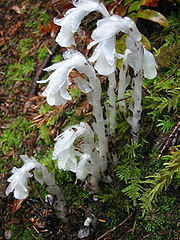
White as an Indian Pipe
Red as a Cardinal Flower
Fabulous as a Moon at Noon
February Hour–
Emily Dickinson (1250, year 1873)


If  you have ever seen Indian Pipe–white and waxy–growing like some walking dead thing under the pines, hidden among the debris of fallen leaves, left over from the previous summer, rebuilding the earth that has become their final gesture to their woods and forest.  It’s gorgeous and haunting. Its other name is “corpse plant." Indeed, they have a hauntingly somber aspect, attracting and still repelling you by their death evoking appearance. They also do not want you to disturb their resting/growing spot. If you do, they will not be taken peacefully.  When you pick them they get back at you by turning black! That glowing whiteness that so attracted you will turn brown, not necessarily  wilting or shrinking but disappearing and  the only thing that is left for you to do...is place them back on their leaf bed to be subsumed.


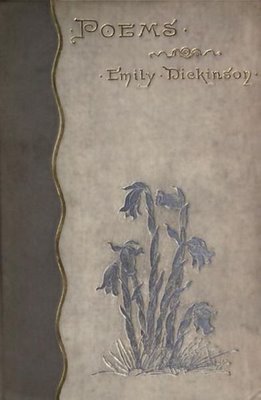
Emily Dickinson’s first book of poetry, published posthumously, has the Indian Pipe on it's cover. 
391px-emily_dickinson_poems
The flower on the cover was done by Mabel Loomis Todd (Emily’s brother’s long-term lover and fascinating woman in her own right.  She and Austin are the reference in my previous post when I mentioned the path being, just wide enough for two lover to meet upon.)  Mabel Loomis Todd painted her a picture of these flowers  sending it to her to which Emily  wrote back her thanks, “That without suspecting it you should send me the preferred flower of life, seems almost supernatural, and the sweet glee that I felt at meeting it, I could confide to none” 
From pages 172, 173, and 174 of Marta McDowell’s book, Emily Dickinson’s Gardens, McDowell writes in length about the Indian Pipe. Besides discussing its importance to Emily, she also gives a primer on the flower itself. “The Indian pipe (Monotropa uniflora) is an unusual plant, visually and botanically. It looks like a waxy albino stem of lily of the valley, completely white and leafless….it is an angio sperm, a flower plant, but one incapable of photosynthesis. Unlike the green growing things around it, it can’t manufacture its own food but relies on symbiotic relationships.” McDowell wonders too if this is not referential to the "virgin in white" that we've come to think of when  thinking about Emily and her reclusive life at her home in Amherst.
I use to see these in and around the Berkshires, where my sister lives, when I was able to travel.  We don't get them here in the city...so if some of you find yourself walking in the woods out in the Northeast, look down, maybe you'll find a little ghost among the leaves, peaking out daring you to see but not touch.  I've also been thinking that this might make a lovely white on white cloth for stitching.  Ah, to be continued...
And now for the grand finale....

 giving thanks to all my friend who may remember to hug a tree, and eat your greens and veggies.  yes, I'm a vegan.  So however you celebrate...enjoy. 

Sunday, November 20, 2011

Sunday's eye candy: emily dickinson

actual fascicle, picture credit emily dickinson museum


Jen Bervin embroiders Emily Dickinson’s handwritten

punctuation and editorial notes 

Jen Bervin embroiders Emily Dickinsons handwritten punctuation and editorial notes writing embroidery art

I have to explain why I just fell in love with these images.  I am a huge Emily Dickinson gruppy...before my father's and now my mother's illness I use to go to Amherst every summer.  Go to her house, walk upon the creeping/creaking floor boards, try to find spells that might remind me of her, stand and meditate in her room, and finally sit in her garden...I've even wandered to her grave site.  After visiting her house I'd walk over to her brother Austin's house...along that narrow path that she described as suitable for two lover to meet along...and get lost in that world.  Lunch was had at an hold hippie joint called the Black Sheep! and a walk around the short turn to the historic society's museum.  But now...just lots of memories I'll try to keep hold of until I'm back there one day. However, enough about me...Sunday's eye candy...this beautiful work...What a great idea.  I copied but credited all the site that I got information from.  Hope this is enjoyable and as good a read for you as it was for me. 
Jen Bervin embroiders Emily Dickinsons handwritten punctuation and editorial notes writing embroidery art Jen Bervin embroiders Emily Dickinsons handwritten punctuation and editorial notes writing embroidery art Jen Bervin embroiders Emily Dickinsons handwritten punctuation and editorial notes writing embroidery art Jen Bervin embroiders Emily Dickinsons handwritten punctuation and editorial notes writing embroidery art

Textile artist Jen Bervin has created something wholly peculiar and wonderful in her project The Dickinson Fascilies. During her lifetime Emily Dickinson tried to avoid publication, referring to it as “the auction of the mind,” and yet she continued to write, completing some 1,700 poems.
Between approximately 1858 and 1864, Dickinson grouped her poems into small handbound packets, later called fascicles. They are very humble bindings: stab-bound with twisted red and white thread and tied off teeteringly near the folded edge. The stitch held the stacked folded sheets together but made them a harder to open. [...] Her fascicles and fragments were dismembered, regrouped, scissored, and marked by her various editors as they changed hands and often her poems have been restructured and changed considerably for print.
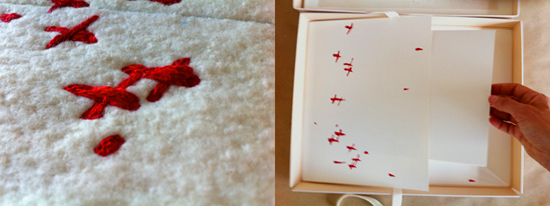
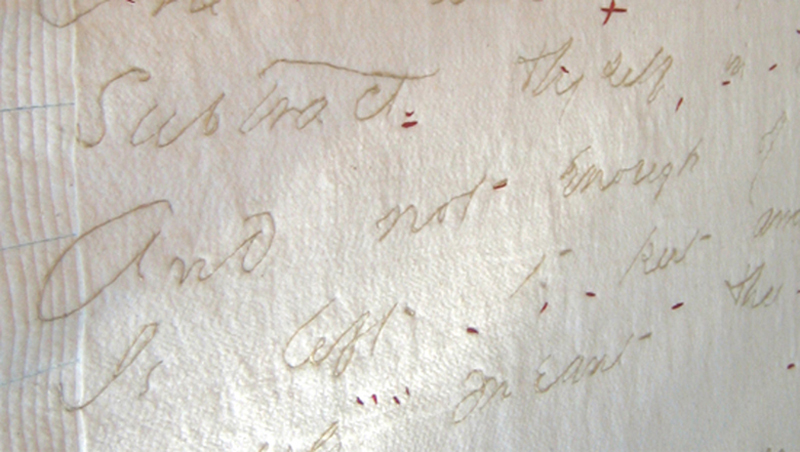
Interested in the editorial patterns Bervin abstracted the editor’s notes, punctuation and other details from Dickinson’s poems and used cotton and silk thread to embroider the marks on enormous cotton sheets nearly 6′ tall by 8′ wide. I’m seriously geeking out over these. A fascinating idea. (via quipsologies)jen bervin embroidery from colossal (source for text and images)

Jen Bervin | The Dickinson Composites (Granary Books 2010)

A series of six large scale embroidered works by Jen Bervin based on composites of the punctuation and variant markings in Emily Dickinson's poetry manuscripts.
A new edition on the series is available now from Granary Books:


Jen Bervin, The Dickinson Composites, Granary Books 2010
Unbound pages and sewn samples from the Dickinson Fascicles
Edition size: 50. Order here.
thread
The Composite Marks of Fascicles 40, 16, 38, and 34. Sewn cotton batting backed with muslin. Each quilt is 6 ft h x 8 ft w. 
Emily Dickinson avoided publication, calling it “the auction of the mind,” but penned nearly 1700 poems in her lifetime. Readers are familiar with her characteristic dashes, but fewer have seen her equally ubiquitous crosses (+ marks) or the variant words to which they correspond because they are rarely reflected in print editions.
The variant words are preceeded by the + mark and often appear listed in clusters after the poem but before the horizontal line Dickinson drew to signal the end of a poem. To read the variants, you move backwards through the poem trying to find the point of insertion, the corollary word or phrase (preceeded by a +) that the variants refer to in the poem. They are sometimes quite close in meaning to the marked word, but in other instances, they are as far ranging as "+ world, + selves + sun."
Between approximately 1858 and 1864, Dickinson grouped her poems into small handbound packets, later called fascicles. They are very humble bindings: stab-bound with twisted red and white thread and tied off teeteringly near the folded edge. The stitch held the stacked folded sheets together but made them a harder to open. The poems are composed on stationery typical of the nineteenth century, vertically folded sheets, plain, laid, or ruled paper with a small embossed image in the upper left corner. The packets contain eleven to twenty poems per grouping.

Detail. Jen Bervin, The Composite Marks of Fascicle 28.
In 1981, Harvard University Press issued a landmark two-volume facsimile edition of Dickinson’s handwritten manuscripts, edited by R. W. Franklin. The edition includes forty of Dickinson’s fascicles—stab-bound packets (non-nested sheets of folded paper) containing eleven to twenty poems per fascicle. The manuscripts also contain a number of unbound sets; her late fragments and letters have yet to be published in facsimile editions. Dickinson’s own publication of her poems is highly specified given that she enclosed poems and lines from poems within letters in correspondence, tuning them subtly for different recipients.
Dickinson’s editorial legacy is complicated at best; her fascicles and fragments were dismembered, regrouped, scissored, and marked by her various editors as they changed hands and often her poems have been restructured and changed considerably for print. Even the current variorum edition of Dickinson’s work persists in defying her line breaks and removes or replaces her crosses with other marks (brackets and numbers to clarify, i.e. change, the system that Dickinson authored). By imposing conventional views of literary authorship (as expressed by book publication) and divorcing her poems from their formal integrity and its intended specificity, the implications of an unusual, complex, pervasive system are harder to understand.

Jen Bervin, The Composite Marks of Fascicle 28. Cotton and silk thread on cotton batting backed with muslin. 6 ft h x 8 ft w.
I wanted to see what patterns formed when all of the marks in a single fascicle, Dickinson's grouping of poems, remained in position, isolated from the text, and were layered in one composite field of marks. The works I created were made proportionate to the scale of the original manuscripts but quite large—about 8' wide by 6' high—to convey the exact gesture of the individual marks. I scanned Dickinson’s manuscript facsimiles (about twenty pages per fascicle), edited them digitally to form composites of just the marks, and used a projector to transfer the marks onto cotton batting (to suggest a highly magnified page) prepared with a hand-sewn center line (a stand-in for the folio fold) and machine-sewn lines that replicated those of the light-ruled laid paper or blue-ruled paper. I embroidered Dickinson’s marks in with handspun hand-dyed red silk thread.
The fascicles from which I made composites showed clearly identifiable shifts in the size, gesture, frequency, and distribution of the marks. In contemplating such an odd physical study, one naturally forms one’s own questions about the nature and meaning of the marks; it makes their presence on the facsimile manuscript page more striking, systemic, factual—and their omission from typeset poems more evident.
I have never doubted Dickinson’s profound precision, however private, nor that the energetic relation of these marks and variants is anything but integral to her poetics. I have come to feel that specificity of the + and – marks in relation to Dickinson’s work are aligned with a larger gesture that her poems make as they exit and exceed the known world. They go vast with her poems. They risk, double, displace, fragment, unfix, and gesture to the furthest beyond—to loss, to the infinite, to “exstasy,” to extremity.

The Composite Marks of Fascicle 34. 6 feet high x 8 feet wide. Cotton and silk thread on cotton batting backed with muslin.

The Composite Marks of Fascicle 38. 6 feet high x 8 feet wide. Cotton and silk thread on cotton batting backed with muslin.

The Composite Marks of Fascicle 19. 6 feet high x 8 feet wide. Cotton and silk thread on cotton batting backed with muslin.

Detail, The Composite Marks of Fascicle 19.
The Composite Marks of Fascicle 16. 6 feet high x 8 feet wide. Cotton and silk thread on cotton batting backed with muslin.
Fascicle sixteen contains the first insert page, a smaller sheet pinned in with a straight pin. The hand-embroidered black text is taken from from this insert page and reads: And could I further / “no”? Emily Dickinson wrote in a letter to Judge Otis Lord, “And don’t you know that “no” is the wildest word we consign to language?"